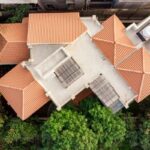
Designing Around Nature: Building Without Cutting Trees

The chainsaw showed up on a Tuesday morning.
Our client had hired a “site preparation” contractor who was ready to clear three coconut trees from their Whitefield plot. Thirty-year-old trees. Beautiful, healthy, providing shade for half the neighbourhood. Gone by lunch if we hadn’t intervened.
“But where will the house go?” the contractor asked, genuinely puzzled.
That’s when we knew we had some explaining to do.
Tree Preservation Isn’t Trendy – It’s Smart Economics
Every mature tree you save is worth ₹50,000-80,000 you don’t spend later trying to recreate what was already there. Plus, try buying a thirty-year-old coconut tree. You can’t. They don’t sell time.
But it goes beyond money. Bangalore’s tree protection laws are getting stricter. The approval process for removing significant trees can add months to your timeline. Meanwhile, designing around existing vegetation often fast-tracks your permissions.
Consider the microclimate benefits. A mature tree drops the temperature around it by 3-4 degrees. Your air conditioning bills will thank you for decades.
The Architecture Gets More Interesting
Constraints force creativity. When you can’t bulldoze everything flat, you have to think three-dimensionally. How do you design a living room that opens to a courtyard with a mango tree in the center? How do you route plumbing around root systems? How do you frame views of branches through windows?
These aren’t problems – they’re opportunities for spaces that feel unique to their location.
Our Hennur project had a natural depression that flooded every monsoon. Instead of expensive drainage and fill, we turned it into a sunken garden. Half the year it’s a reflecting pool. The other half, it’s a cool retreat with built-in seating. The clients love showing it off.
What This Actually Looks Like
Design Phase: We survey existing vegetation first, before sketching a single room. The site plan starts with what’s already there.
Construction: Tree protection isn’t just fencing – it’s coordinating material deliveries, equipment access, and construction sequencing around root zones.
Finishing: Mature trees become architectural elements. We’ve built reading nooks around tree trunks, routed pathways between existing shrubs, and designed lighting that highlights bark textures at night.
The result? Homes that feel like they’ve been there forever, even when they’re brand new.
Not Every Tree Makes the Cut
Let’s be practical. Diseased trees, structurally unsound specimens, or trees in genuinely impossible locations sometimes have to go. We work with arborists to make these calls based on tree health, not construction convenience.
But the default should be preservation, not removal. Especially in a city losing tree cover as fast as Bangalore.
Your site has a story that took decades to write. Why erase it in an afternoon when you could build it into your home’s character instead?